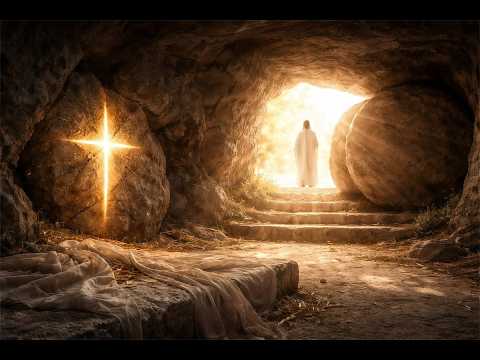
Hash, I died and Jesus revealed the seven reasons why God's chosen people often prefer to stay at home.
My name is Donya. I am 51 years old and I live in a small town in rural Tennessee. Two years ago, I died during emergency surgery. What Jesus showed me while I was on the other side completely changed the way I see life, faith, and even my own home. I died and Jesus revealed the real reasons why God's chosen people sometimes prefer to stay at home rather than go out.
It may sound strange to say that. It may even sound wrong. But before you judge, I need you to listen to everything that happened to me that day.
For 28 years, I was a Christian with a very busy schedule. Sunday morning worship services, women's Bible study on Wednesdays, choir practice on Fridays. I organized church events, prepared meals for the sick, and participated in every church campaign. If someone had asked me who I was, the first thing I would have said was, "I'm a church person."
My entire identity revolved around what I did publicly and I thought that was what faith was all about. I measured my spirituality by how often I left home to attend a religious gathering. The more I went out, the more spiritual I believed I was becoming. I didn't realize it, but I had turned my faith into a calendar full of appointments. God had become another item on my to-do list instead of the center of my life.
I was so busy doing things for God that I no longer had time simply to be with him. And this is a trap that many sincere Christians fall into without even realizing it.
Then, in November 2023, I was admitted to the hospital with a complicated case of appendicitis. The doctors told me the procedure was straightforward and routine. My husband, Richard, was in the waiting room with my eldest daughter. Everyone was calm. I was calm, too. Everything seemed to be under control. Nobody was worried. Nobody imagined what was about to happen.
Then, in the middle of the surgery, my blood pressure suddenly plummeted. My heart stopped. The doctors later told me that it had lasted almost 5 minutes, 5 minutes during which I was no longer there. But to me, those minutes did not feel like minutes at all. It was something entirely different.
Time did not work the same way. I was somewhere else, and I was more conscious than I had ever been in my entire life. Every detail was clearer, more real, and more vivid than anything I had ever experienced on Earth. And Jesus was standing right in front of me.
The first thing he said was not, "Welcome." He did not tell me, "Be at peace." He looked directly into my eyes with an intensity I cannot describe in human words and asked me a question. "Donya, do you know why I have brought you here?"
I didn't know how to answer. My mouth opened, but no sound came out. Because in that moment, I realized that everything I thought I knew about God, the church, and faith was about to be shaken.
Then he said, "I want to show you something you have never understood. There are people all over the world whom others consider reclusive, antisocial, or disconnected. They are people who prefer to stay at home. Many people think these individuals are lost, weak, or far away from me. But I am going to show you that for many of my chosen ones, home is precisely where I have called them to be. And the reasons will surprise you."
Then he began revealing the seven reasons to me, one by one.
Hash reason one, they have discovered that they are the church.
The first reason stopped me in my tracks. Jesus asked me, "Donya, do you know what my church really is?"
I thought I did. To me, the church was the white building with a steeple on the main street of our town. It was the place I attended three times a week, the place I helped keep running with my time, money, and energy. That was where I believed I encountered God, or at least that was what I had always assumed.
But Jesus said something that turned my understanding upside down. "My church has never been a building, Donya. My church is made up of people."
He showed me something I can only describe as a vision within that experience. I saw thousands of buildings around the world, enormous cathedrals in Europe with colorful stained glass windows and centuries of history, modern churches in America with stage lighting and giant screens, and small chapels beside dirt roads in Africa. Then Jesus said, "I do not live in any of these buildings. I never have."
Suddenly, the scene changed, and he directed my attention toward the people. I saw a mother kneeling in her kitchen at 5:00 in the morning praying for her children before they woke up. Silent tears fell to the floor as she whispered each of their names one by one. I saw a man sitting on the back porch of his home in Alabama with his Bible open on his lap and a cup of coffee growing cold beside him. He was completely absorbed in God's word before leaving for a job he did not enjoy. I saw a teenage girl lying in bed late at night with her phone switched off, asking God whether he was real, whether he cared about her, and whether he was listening.
Then Jesus said, "These are my temples, every one of them. I live within them."
He reminded me of what the Apostle Paul wrote to the Corinthians. "Do you not know that you are the temple of God and that the spirit of God dwells in you?" .
Jesus explained that this is not merely a beautiful metaphor to put in a frame on the living room wall. It is not a decorative Bible verse to print on a Christian event t-shirt. It is one of the deepest realities of the Christian faith. It is at the very center of everything. It is the foundation upon which everything else rests. Every person who gives their life to him becomes a dwelling place for the Holy Spirit.
The church of Christ does not have a fixed address. It does not need a postal code or a registered business number. It has a heartbeat. It breathes, walks, cries, loves, and serves. And it can be present in the living room of a home in Tennessee just as surely as it can be present in any great cathedral in the Vatican.
Then he showed me , which says that the God who made the world and everything in it, the Lord of heaven and earth, does not live in temples made by human hands.
Jesus said, "That is why many of my chosen ones do not feel the need to leave their homes in order to find me. They have finally understood something that took you almost 30 years even to begin to recognize. They understand that they are the church wherever they are, I am there. They do not need to enter a building to be in my presence because my presence already lives within them."
Then he clarified something important. "I am not saying that gathering together is wrong. I am saying that anyone who believes they must be inside a particular building to find me has missed the most important point of all."
Those words pierced my heart like a blade. For nearly three decades, I had confused the address with the essence. I thought going to the building meant going to God. I had never truly understood that God already lived within me and had been there all along, waiting for me to stop rushing from one event to another and become quiet enough to hear him in my own living room.
Hash reason two, they have discovered the secret place of prayer.
The second reason came immediately afterward and it transformed the way I understood prayer, worship, and everything I thought I knew about seeking God.
Jesus said, "Donya, I want to show you why so many of my chosen ones prefer to remain at home while seeking me and what they have discovered there that many people never find anywhere else."
He showed me two scenes side by side. In the first scene, a woman was attending a crowded worship service. The music was loud, the lights were colorful, and hundreds of people surrounded her. She raised her hands, sang, and swayed to the music. To anyone watching from the outside, she appeared to be worshipping intensely.
In the second scene, another woman was at home in her bedroom. The door was closed. There was no music, no audience, and no special lighting. She was kneeling beside her bed, her Bible open and her eyes closed. The silence was so deep that she could hear her own heartbeat.
And somehow, I could perceive which of the two women was truly connected to Jesus. It was not the woman at the worship service.
Then Jesus quoted his own words from . "But when you pray, go into your room, close the door, and pray to your father, who is unseen. Then your father, who sees what is done in secret, will reward you."
He said, "Donya, the home is a secret altar. It is the place where the door closes and the world remains outside. There is no microphone, no camera, no one to impress, no one to evaluate you, and no one to applaud you. And it is precisely there that you can hear me most clearly."
He explained that the noise of the world competes with his voice every day. Notifications, opinions, demands, schedules, social media, news reports, and other people's expectations all compete for our attention. Yet many of his chosen ones had discovered that the only place where they could truly hear his voice was within their own homes. In the stillness of the early morning, while the entire family was still asleep. In the quiet living room after everyone had left. In the peacefulness of a closed bedroom after the day had finally come to an end.
Then Jesus said something that has stayed with me ever since. "I do not shout to compete with the noise, Donya. I whisper. And those who want to hear me must learn to be still."
He reminded me of the prophet Elijah. God was not in the earthquake. He was not in the fire. He was not in the powerful wind that tore the mountains apart. Instead, Elijah encountered the Lord in a gentle whisper, a quiet and delicate voice.
And Jesus said, "Home is where that whisper can be heard. That is why my chosen ones do not want to leave. They have discovered the altar that no one else can see. At that altar in the kitchen, beside the bed, or in the living room chair, I appear, I reveal myself, and I speak. What I say in secret is worth more than a thousand sermons heard distractedly from a padded church pew."
As he spoke, I felt the weight of all the times I had sat in church thinking about my shopping list, problems at work, an argument with Richard, what I would cook for lunch, or some comment another woman had made about my clothes. My body had been inside the church building, but my heart had been somewhere else entirely. God was speaking, but I was not listening. I had never learned to be still. I had never learned to value silence. I confused noise with anointing and constant activity with devotion. And while I rushed from one commitment to another, God was waiting for me in the one place where I had never stopped long enough to seek him properly, my own home.
Hash reason three, home reveals who you really are.
The third reason confronted me personally because it was about me, about who I really was when nobody was around to evaluate me.
Jesus showed me myself. I saw two completely different versions of my life. In the first scene, I was at church, smiling, hugging people, speaking enthusiastically about my blessings, and praying with my hands raised so everyone could see. I was involved in everything. People noticed me. People praised me. Donya is so dedicated. Donya never misses a service. Donya is such a wonderful example.
But in the second scene, I was at home alone with my family, and the version of myself I saw was almost unrecognizable. I was impatient with my husband over insignificant things. I spoke harshly to my daughters when they interrupted me. I complained quietly about life. I did not pray. I did not read God's word. I was irritable, tired, and empty. There was no evidence that I was the same woman who had stood in front of the congregation only hours earlier, smiling with her hands raised in worship.
Then Jesus said, "Donya, inside your home, there is no performance. There is only truth. And the truth is that you are living as two different people, one for the public and another for your family."
Those words broke me because I knew he was right. Every word was true.
He continued, "Many of my children have learned how to appear spiritual in public. They have learned the right gestures, the right words, the right tone of voice, and even the right moment to cry or say amen. But when the door of the house closes, the mask falls away. And who is left? Who are you when the audience has gone home?"
He explained that this was precisely why many of his chosen ones preferred to remain at home. Home did not allow them to pretend. At home, you are confronted with who you really are. There is no congregation to validate your testimony. There is no pastor standing nearby to praise your commitment. There is only you, your family, and God. And God sees everything.
Jesus said, "Donya, those who remain at home and seek me there have discovered something that many Christians who have spent 30 years sitting in church pews have never discovered. They have discovered that a faith that works only when someone is watching is not faith. It is a performance. But the faith that works in an empty bedroom, in a quiet kitchen, or in the living room in the middle of the night when nobody is watching and nobody will ever know, that is the faith I seek. That is the faith that pleases me. That is the faith that transforms."
He explained that is not primarily about worshipping in the right location.
It is about worshipping in the right way, in spirit and in truth. And truth does not need a stage. Truth does not need spotlights. Truth exists even when nobody is looking. Many of his chosen ones who preferred to remain at home had discovered that away from the eyes of the world, truth finally had room to exist without a disguise.
Hash reason four, the home is where godly character is tested and developed.
The fourth reason helped me understand something I had failed to recognize throughout almost 30 years of being a Christian. Jesus said, "Donia, I want you to see what really happens inside a home where my spirit dwells because what happens there is more important than what happens on the stage." He showed me ordinary scenes from everyday life. On the surface, they seemed completely unremarkable. A husband apologizing to his wife after a pointless argument about who had forgotten to pay the electricity bill.
A mother taking a deep breath and silently counting to 10 before responding to her 7-year-old child with patience instead of shouting. A father arriving home exhausted after 12 hours of physical labor but choosing not to shut himself away in his bedroom. Instead, he sits on the living room floor and plays toy cars with his son. A wife choosing not to retaliate after her tired husband speaks harshly to her. Instead, she says, "I love you. I know you're exhausted."
Then Jesus said, "That is the fruit of my spirit being produced in real time." He quoted , which speaks of the fruit of the Spirit: love, joy, peace, patience, kindness, goodness, faithfulness, gentleness, and self-control. Then he said something that marked me deeply. "Donia, it is easy to appear loving for 2 hours during a Sunday service. It is easy to appear patient with a stranger you see once a week, someone who never truly tests your limits. It is easy to appear gentle when everyone around you is polite and pleasant. But the real test of the fruit of my spirit is not the church service. It is living with other people. It is inside your home with the people who see who you really are 24 hours a day, 7 days a week, that your character is either forged or exposed."
He explained that the home is the laboratory in which godly character is developed. That is where patience is genuinely tested, not with polite strangers, but with the person who has left a wet towel on the bed for the hundredth time. That is where forgiveness costs more because it must be offered to the person sleeping beside you, someone who knows exactly where to hurt you. That is where love becomes more difficult because it is required every day without breaks, without holidays, without applause, and without anyone saying, "How beautiful" or "What a wonderful example."
Jesus continued, "Many of my chosen ones have understood this. They understand that home is where genuine character is formed. Not at 3-day conferences, not during weekend spiritual retreats, not at events featuring famous preachers. It is formed at home through the daily repetition of choosing love when giving up would be easier, and through the quiet decision to forgive when nobody is keeping score."
He explained that when the fruit of the spirit begins to appear genuinely in someone's life, the first place it becomes visible is not on a church platform. It is at the dinner table. It is at bedtime. It is during a disagreement about money. It is inside the home. And when someone is genuinely transformed at home, that transformation naturally overflows into every other area of life. People notice. Neighbors notice. Coworkers notice. There is no need to announce it. The transformation speaks for itself.
But when someone tries to appear transformed on the outside without being transformed on the inside, the home always reveals the truth. Always. Because the walls of your home do not lie, and the people who live with you know exactly who you are.
And then came the fifth reason, which made me cry because it reminded me of people I had judged so harshly, I was now ashamed to think I had condemned.
End of part one. Hash: Donia died and Jesus revealed the seven reasons why God's chosen people often prefer to stay at home. Part two.
Hash reason five. Home can be a place of healing for those wounded by the church.
Then Jesus showed me something that made me cry because it reminded me of people I had judged so harshly. Looking back, I felt ashamed that I had ever condemned them. He showed me people who had been deeply wounded by their experiences in church. Some had been betrayed by leaders they trusted. Others had been humiliated publicly, manipulated emotionally under the guise of discipline, or controlled by people who used biblical language to justify their abuse of authority.
I saw people who had been pressured to give money in the name of faith while their genuine needs were ignored. I saw pastors who used the pulpit to control, manipulate, and silence people instead of leading them with love. Some leaders preached about love in public while destroying families behind closed doors. These people had given their time, money, energy, and trust to religious systems that demanded everything from them but gave very little in return. Eventually, they became exhausted.
They withdrew into their homes, not because they had stopped loving God, but because they needed somewhere to recover. Yet, people judged them. They called them backslidden. They accused them of becoming spiritually cold. They said they had abandoned their faith simply because they were no longer attending services as frequently as before.
But Jesus showed me something I had never fully understood. He said that he had been with those people when they were wounded. He had seen every tear they cried. He had witnessed every sleepless night, every moment of confusion, and every prayer they struggled to whisper when they no longer knew whom they could trust. He had not abandoned them in their pain. When they returned home and closed their doors, Jesus went with them. He sat beside them in their suffering. He understood the wounds that other people could not see.
Then he showed me that for some people, home becomes a hospital, a place where spiritual healing begins. It is a place where a broken heart can slowly recover, where a person can learn to trust again, and where someone who has been crushed by religious abuse can discover that God is not the same as the people who mistreated them.
Jesus reminded me of Peter, who denied him three times. Peter failed terribly, but Jesus did not discard him. After his resurrection, Jesus restored Peter and gave him another opportunity to serve. He also reminded me of David. David committed terrible sins involving Bathsheba and her husband, Uriah. When the prophet Nathan confronted him, David had to face the truth about what he had done. He repented, cried out to God, and later expressed the depth of his repentance in .
Then Jesus showed me the prodigal son. The young man left his father's house, wasted his inheritance, and eventually found himself in desperate circumstances. But when he finally decided to return home, his father ran to meet him and embraced him. In each of these stories, I saw the same message. Failure does not have to be the end of the story. Repentance, restoration, and healing are possible. Sometimes the first step toward restoration happens in the quietness of one's own home, where a person can honestly confront the pain, confusion, and mistakes that have accumulated in the heart.
But Jesus also made something very clear to me. He does not want people to turn their wounds into permanent walls. There is a difference between taking time to heal and deciding never to trust anyone again. There is a difference between stepping away from an unhealthy environment and abandoning fellowship with other believers altogether. teaches believers not to neglect gathering together. That instruction still matters. We need one another. We need encouragement, fellowship, accountability, and the support of a genuine community of faith.
But healing sometimes takes time. Jesus showed me that he can bring someone home to recover without intending for that person to remain isolated forever. He understands the difference between a season of healing and a lifetime of hiding. He does not want the wounded to be condemned for needing time to recover. Nor does he want their pain to become a prison that prevents them from ever experiencing healthy Christian fellowship again.
When the time is right, when healing has begun and strength has been restored, the door can open again. Jesus does not abandon the wounded. He meets them in their pain, helps them heal, and gently leads them toward restoration.
Hash reason six, your home is your first mission field.
Then Jesus showed me something very ordinary. I saw a person waking up in the morning, preparing coffee, cleaning the house, washing dishes, and going about the responsibilities of daily life. There was no church service taking place. No preacher was standing behind a pulpit. There were no microphones, cameras, or crowds. It was simply an ordinary day. The person spoke briefly with a neighbor, prepared lunch, helped a child with homework, and called a friend who was going through a painful divorce.
As I watched, Jesus began to show me that these ordinary moments were not insignificant. The conversation with the neighbor could plant a seed of hope. A small act of kindness could demonstrate the love of God. Honesty could preach a message without a single word being spoken from a pulpit. Patience could reveal the fruit of the spirit. Taking the time to listen to someone who was suffering could become a ministry. Showing up for a person who felt forgotten could communicate the love of Christ more powerfully than a carefully prepared speech.
Then Jesus showed me that the home is often the first mission field entrusted to a believer. Before someone stands behind a pulpit, travels to another country, or participates in a major ministry program, there are people and responsibilities right in front of them. There is a family to love. There are relationships to nurture. There are neighbors to treat with kindness. There are children who need guidance, spouses who need consideration, and people around us who may be carrying burdens we know nothing about.
The kitchen can become a place of ministry. The dinner table can become a place where love is demonstrated. A conversation at the front door can become an opportunity to encourage someone who has almost lost hope. Even the way a person cares for their home, handles responsibilities, and treats family members can reveal something about their faith.
Jesus showed me that many people are waiting for a great opportunity to serve him while overlooking the opportunities already placed in their hands. They want to preach to thousands, but they struggle to speak kindly to the people who live under the same roof. They want to travel far away to help strangers, but they fail to notice the person next door who needs a little compassion. They want to be recognized for their ministry, but they neglect the quiet responsibilities through which genuine love is often revealed.
Jesus reminded me of the Great Commission in , where he instructed his followers to go into all the world and preach the gospel. That command is not limited to people who stand behind pulpits or travel to distant countries. Every believer has a responsibility to represent Christ wherever God has placed them. And for many people, that work begins at home.
Your life can preach louder than a microphone. The way you forgive someone who has hurt you can preach. The way you remain faithful when nobody is watching can preach. The way you care for your children, honor your commitments, and respond to difficult situations can leave a lasting impression on those around you. Your children and grandchildren may remember how you lived far longer than they remember the words you spoke.
People are watching how you react when you are tired, how you treat others when you are frustrated, and whether your private behavior reflects the faith you profess publicly. This does not mean that every day will be perfect. Believers make mistakes, become exhausted, and sometimes respond poorly. What matters is the willingness to repent, seek forgiveness, make things right, and continue growing in Christ.
Your home is not a place where your mission pauses. Your home is part of the mission itself. You do not need a platform to serve God. You do not need a crowd to demonstrate his love. You do not need public recognition for your service to matter. Sometimes, the most meaningful ministry happens in the quietest places through small acts of faithfulness that nobody applauds.
Hash reason seven, God uses hidden seasons to prepare his people.
Then Jesus showed me something that completely changed the way I understood seasons of isolation. He showed me Moses. Before Moses became the man God used to lead the Israelites out of Egypt, he spent years in the wilderness. He had once lived as a prince in the Egyptian royal household, but his life took a different direction, and he became a shepherd in the land of Midian. He spent years away from the position he had once known. Yet God had not forgotten him. In that wilderness, Moses encountered God in a burning bush. What appeared to be an ordinary place of obscurity became the place where God called him to an extraordinary assignment.
Then Jesus showed me Elijah. There was a time when Elijah became so exhausted and discouraged that he sat beneath a tree and asked to die. He was overwhelmed by what he had experienced and could no longer see a clear way forward. But God met him in that moment of weakness. Elijah was cared for, strengthened, and eventually guided toward his next assignment.
Jesus also showed me David hiding in caves while King Saul pursued him. David had been anointed for a future he had not yet entered, but he spent a long period living in uncertainty and danger. During those hidden years, David wrote Psalms and learned to depend on God. Before he sat on a throne, he learned to worship in the fields and caves.
Then Jesus reminded me of Paul, who encountered him on the road to Damascus. Paul did not need to be standing in a temple or receiving the approval of religious leaders when Jesus confronted him and changed the direction of his life.
These men had different experiences, but they shared something important. God met them in places where they were not surrounded by applause, public recognition, or the security of familiar religious routines. Jesus showed me that the hidden season can become a sacred wilderness, a place where he prepares people for what lies ahead.
God is not confined to a Sunday service. He can meet you in a hospital room in the morning. He can meet you in your car after you receive the worst news of your life. He can meet you in your kitchen before sunrise when everyone else is asleep and your heart is too heavy to rest. He can meet you in grief, uncertainty, disappointment, and seasons when you do not understand what he is doing.
Do not despise a hidden season simply because nobody sees what you are going through. A seed grows underground before it appears above the surface. A foundation is built beneath a structure before the world sees the finished building. In the same way, God can develop qualities within a person that are formed through quiet obedience, difficult circumstances, prayer, and perseverance.
Some of the strongest people are formed during seasons when nobody is applauding them. Some of the deepest lessons are learned when there is no audience, no platform, and no public recognition. What God develops in the secret places of your life can become the foundation that enables you to stand when greater responsibilities come.
Jesus showed me that I could call upon him while sitting on the living room floor, kneeling beside my bed, or sitting quietly in a kitchen chair. He did not need me to be in a particular building before he would hear me. He would be there before I had even finished calling his name. says that everyone who calls on the name of the Lord will be saved. The invitation is not restricted to a particular room or location. God hears the sincere cry of a heart that turns to him.
Sometimes, people encounter God more deeply during their worst seasons than they did during years of attending Sunday services. This does not mean that gathering with believers is wrong or unnecessary. It means that hardship can strip away distractions, expose our weaknesses, and bring us to a place of honest dependence on God. In the wilderness, we may discover that we cannot rely on appearances, reputation, or the approval of others. We must learn to trust him.
Jesus showed me that he sees the battles nobody knows about. He sees the temptation you resist when nobody is watching. He sees the prayer you whisper at 2:00 in the morning. He sees the moment you choose forgiveness instead of revenge, even though your heart is still hurting. He sees the tears you wipe away before anyone enters the room. None of these moments is invisible to him.
Your hidden season is not necessarily a wasted season. It may be the very place where God is teaching you to walk with him more deeply, strengthening your character, and preparing you for the responsibilities that lie ahead.
The wilderness does not last forever. Moses eventually left the wilderness to lead a nation. Elijah received further instructions. David's years of hiding did not prevent him from becoming king. Paul's encounter with Jesus changed the direction of his entire life. In each case, there was more to the story than the season in which they felt hidden.
So do not assume that because you are at home, away from crowds, or passing through a difficult season, God has forgotten you. He may be doing a work in you that cannot be measured by attendance, public activity, or human recognition. Sometimes, before God changes what is happening around you, he works deeply on what is happening within you. And when the hidden season comes to an end, the growth that took place in secret may become visible through the way you live, serve, love, and respond to the world around you.
The greatest evidence of God's love. After showing me these seven reasons, Jesus prepared to send me back. But before I returned, he showed me the cross. I saw the suffering, the blood, and the pain. I understood, in a way I had never fully understood before, the weight of what Jesus endured and the significance of his sacrifice.
He showed me that people are constantly searching for signs, extraordinary experiences, powerful feelings, and